Introduction
One of the reasons for stating this blog was because in June 2015 I became a butterfly “counting” volunteer with Proyecto Lepides, a Spanish organisation similar to Butterfly Conservation in the UK, but then on a small scale (at this moment in time anyway). The goal is to be able to create a map of Spain for all the butterfly species that fly here. Will write more on the organisation in a later post.
As volunteer, I walk a number of transects (recorridos in Spanish) within the 10km x 10km UTM square 30TVN09, which lies in the northern Spanish province of Cantabria (handily I live in the UTM square I monitor).
A few days ago was the first time in 2016 that I walked the transect hoping to spot some butterflies … below is an account of what I saw.
Recorrido A – 23.01.16 – 30TVN09, Casar de Periedo
The weather was quite nice for this time of year. I’d usually expect temperatures around the 5-10C with clouds and rain. It was around 19C when I headed out (2PM) and it was sunny with no clouds in sight. To top it off, there was zero sign of wind … basically the perfect weather for a spring day of butterflying, only it was still winter …
As I walked down the first stretch of dirt road I suddenly spotted my first butterfly of the year, a white one zipped by, heading south. I whipped up my binoculars, but could not get a clear ID. I could only make an educated guess of Pieris rapae (Small White), which are very, very common in this area. It did provide hope and … A short period later my second butterfly, again I could not be 100% sure and my best guess for the streak of yellow flying south was Gonepteryx rhamni (Brimstone).
I had hope I’d see more, but kept my fingers crossed they’d not all be in a rush to get somewhere I wasn’t going.
I was on a small tarmac road and I turned onto the road that runs along the bottom of a hill … full in the sun at the bottom of the south facing slope, perfect. This is my favourite stretch of the transect and I knew that the next 500m would be crucial if I was to head home with a positive ID.
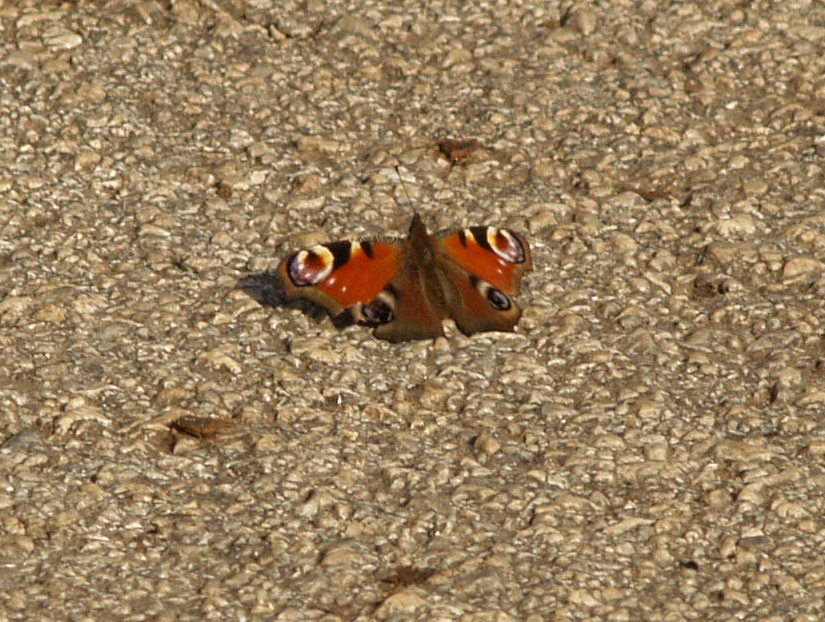
Within a couple of steps I got it … zipping around my head a really dark butterfly. I watched it bob up and down and twist around before settling down along the side of the road … in flight you always notice the deeply dark undersides and when they land, out pop the eyes … even without my binoculars I could see it was an Aglais io (Peacock) … my first certain ID butterfly of 2016 was the exact same as that of the previous year! It sat there, full in the sun and I took a few quick photos before heading further down the road.
The road was now flanked by trees on both sides (not only the hill to the north) and within some of the splotches of sun shining through the trees I saw the second species sitting sunning itself … within seconds it was joined by 2 others and the three battled a bit for the rights to the sunny patches … the ever present Pararge aegeria (Speckled Wood).
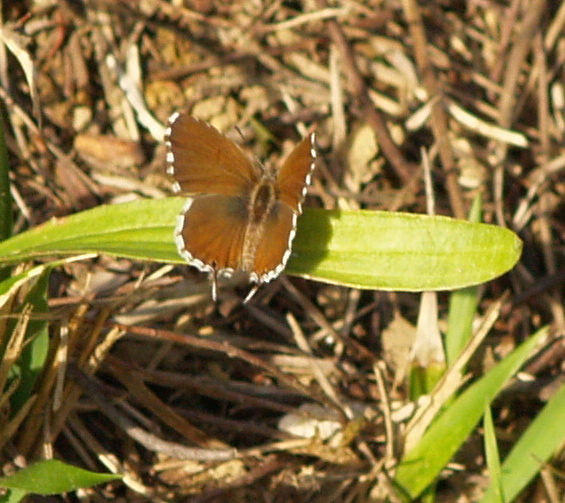
When I got to my absolute favourite spot on the route I stopped to take a closer look at the surrounds … nothing … when I headed further, 5 minutes later, I hadn’t started walking before I saw a tiny dab of grey shakily fluttering about … Cacyreus marschalli (Geranium Bronze), an invasive species from South Africa. What was it doing so far away from the village where I usually saw this species?
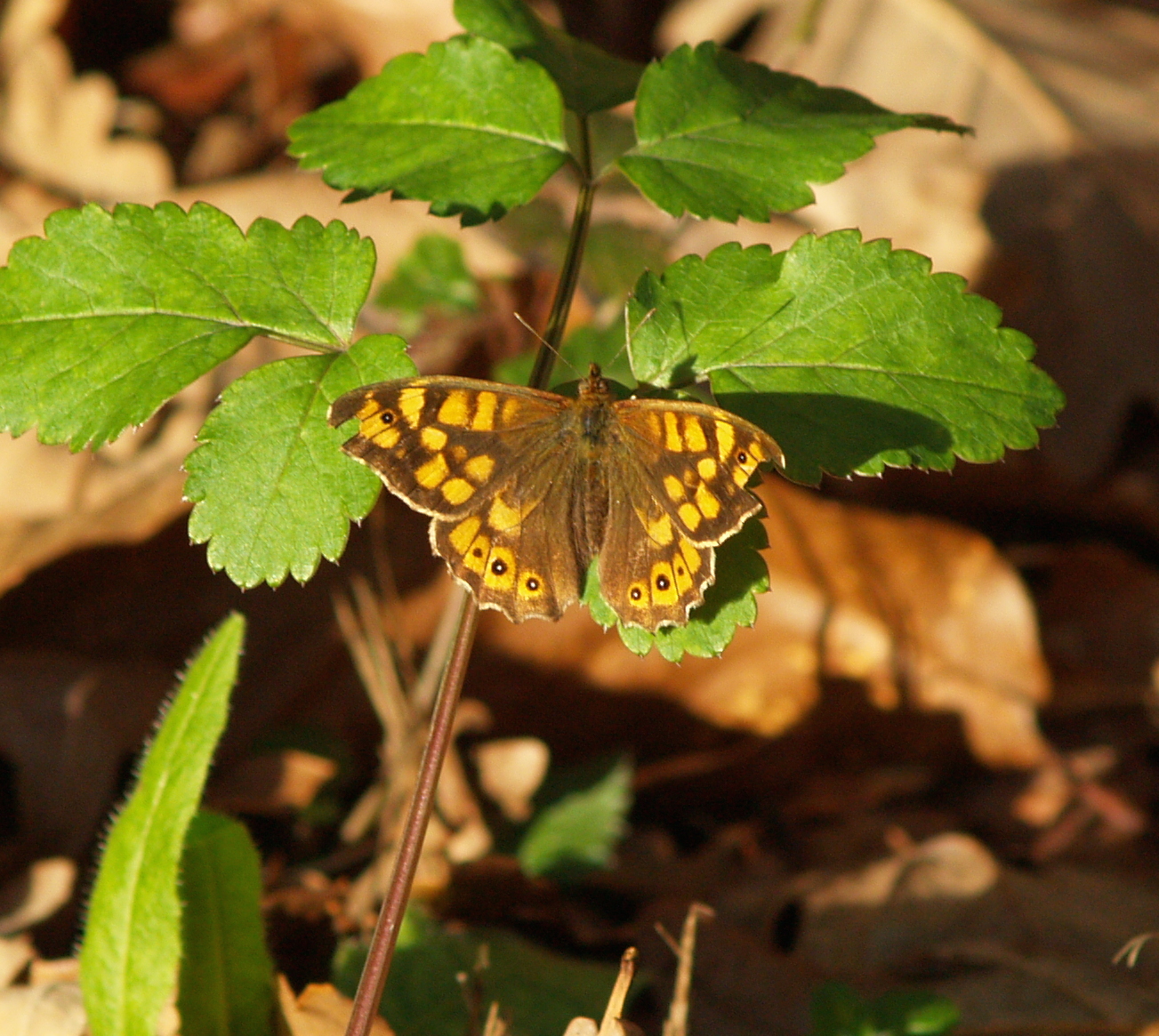
And then I came to butterfly heaven on that day … every 20m or so I’d spot another Speckled Wood sunning along the sides of the road. However, just before I turned back onto the dirt track … there they were … everywhere I looked more and more Peacock butterflies, mostly drinking nectar from dandelions (Taraxacum spec.) or sunning on the warm road. Zipping around me, it was kinda crazy. I’d only seen this many at one time when I saw them as caterpillar.
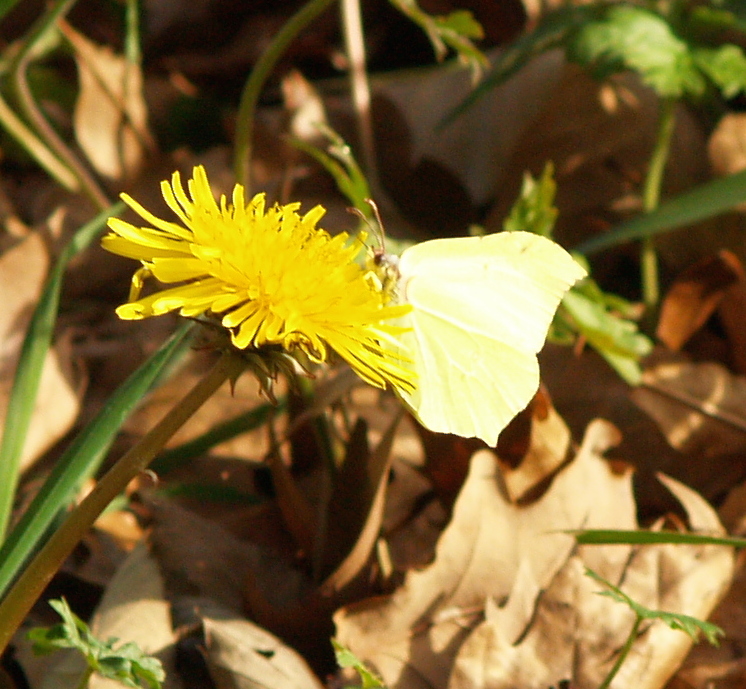
As I was enjoying the spectacle I saw a big fat yellow butterfly drinking from a dandelion … yup, this time I knew it for sure, a Brimstone.Then when I turned onto the dirt track a white butterfly came zipping by and landed on a dandelion nearby … I just had time to take a couple of pictures for a positive ID at home … Small White.
Walking down the dirt track, slowly on my way home I marveled, 5 species in January, nuts. I looked back and could see tiny specks of white zipping between the trees where I’d just been standing … but I had to head home, my oldest son was waking up (I’d been pushing him in the stroller during the walk … siesta time for him).
Other insects seen … Bombus terrestris/lucorum and Apis mellifera.
Summary

– Pieris rapae — 1 certain, 1 probable.
– Gonepteryx rhamni — 1 certain, 1 probable.
– Aglais io — between 10 and 15 in total.
– Cacyreus marschalli — 1.
– Pararge aegeria — between 10 and 15 in total.
Further Reading
– My sightings for the day on Observation.org.
– Proyecto Lepides blog entry for January 2016. Summary of butterflies seen in Spain during January.

 Searching for Cullum's Bee