Proyecto Lepides – Recorrido A, 30TVN09, Casar de Periedo – 27&29 03.16 – unofficial

Introduction
The 26th had been spectacular weather, all be it a bit windy, with temperatures in the mid 20s. Unfortunately, there were visitors over and other plans had been made. The next day however, I was able to walk the outer track of the route when all of us went on an afternoon stroll. The visitors were interested in the volunteer work I do for Proyecto Lepides and wanted to get a feel of the transect. This meant that I would point out butterflies etc. as we walked the route and we did not do this too intensively by walking into fields etc. We saw quite a lot of butterflies out and we even saw another first-for-the-year species.

A couple of days later I did another “lite” walk of the transect, not walking the two interior dirt tracks. Again I saw a new species for the year.

I will give a very brief account below and the summary will only mention the species seen, most were seen over both days. No mention of numbers as such, as I was not really counting. Both walks were interesting, as they came so soon after a warm period and I was hoping to see the first real signs of a change in the air …

Recorrido A – 27 & 29 03.16 – 30TVN09, Casar de Periedo
The 27th was interesting, as it came after the first really warm day of the year. We went on an afternoon walk and it was around 21C but there was quite a breeze out and it was fresh in the shade.

The first butterfly we saw was instantly a new species for the year, Holly Blue (Celastrina argiolus). Not the most common of butterflies here but I did see it on numerous occasions last year. It was sitting on a fallen leaf and did a quick flutter, flashing its crisp blue wings. Normally, I spot these zipping along at great speeds a metre or two above the ground.
During the rest of the walk there was an abundance of the usual suspects. It was quite an impressive walk for the guests due to the numbers of butterflies seen.
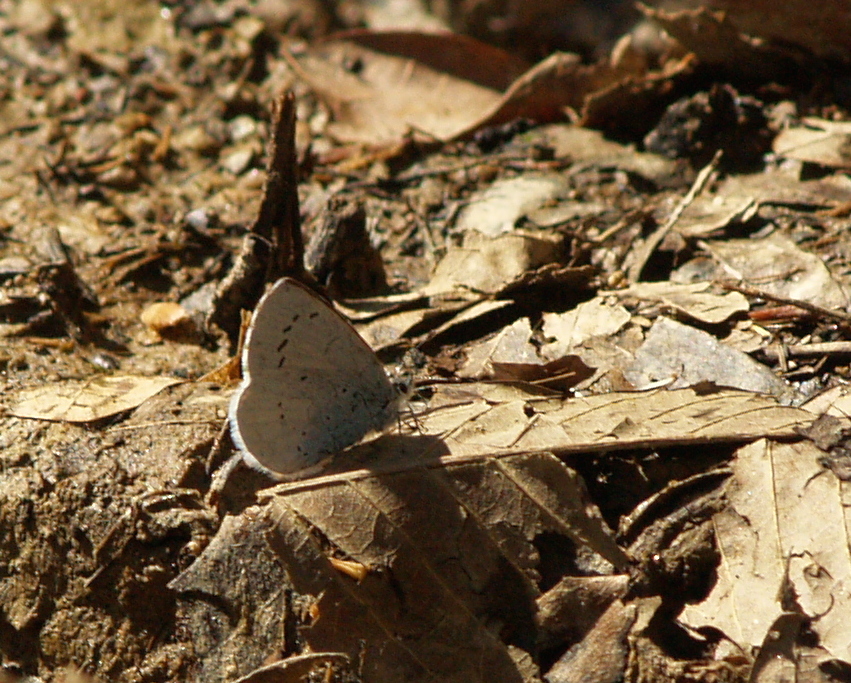
Holly Blue in Cantabria, Spain. 27.03.16

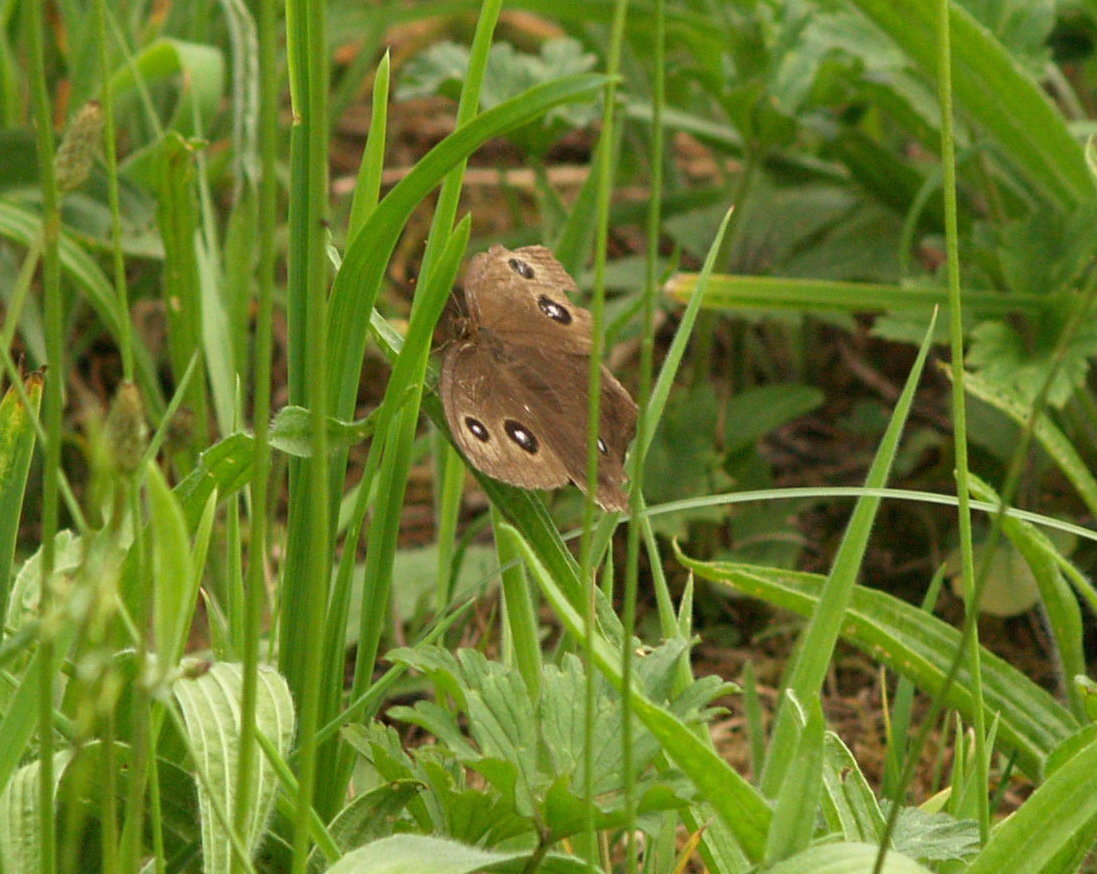
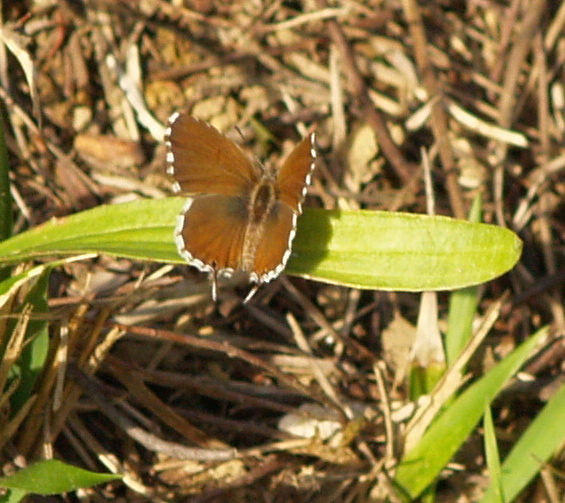
The 29th was similar weather, sunny, with some clouds and the temperature was around 17C with not much wind this time around. The time between the walks was filled with rain. I was able to go a bit more at my own pace this time around and headed out into a field or two, where I spotted the first Small Heath (Coenonympha pamphilus) of the year. Last year I never saw them in great numbers, but it was a butterfly that was constantly present during most of the year.
The other butterflies seen were again the standard ones and in decent numbers.

Small Heath in Cantabria, Spain. 29.03.16

Highlight of the walk was watching a Stoat (Mustela erminea) criss-cross the road a couple of minutes carrying a bird in its mouth. Difficult to get good pictures, but was able to get a couple from very close by, as it was curious to see what I was doing and came quite close to have a look (safely sheltered in the bramble).

Stoat in Cantabria, Spain. 29.03.16

During the walk I’d not been able to identify a couple of butterflies, where this normally irritates me a bit it gave me hope for the coming period. I suspected I saw a skipper and another blue … and maybe an early fritillary, but I couldn’t be sure. A couple of days later it would become clear that my hunch was in the right direction …

Other interesting animals seen:
Lissotriton helveticus.
Lacerta bilineata.
Mustela erminea (Stoat)!

Summary
Celastrina argiolus – first for the year.
Pararge aegeria.
Pieris napi.
Aglais io.
Gonepteryx cleopatra.
Colias croceus.
Gonepteryx rhamni.
Coenonympha pamphilus – first for the year.

Species year total — 12 (2015 – 45).

Further Reading
– My sightings for the days on Observation.org.
Proyecto Lepides – Recorrido A, 30TVN09, Casar de Periedo – 27&29 03.16 – unofficial

Bee-news – Early Bumblebee – Bombus pratorum (Linnaeus, 1761)

Introduction
I was going to write about one of my favourite bumblebees next, but due to the season (early spring) I thought I’d write about a species that starts showing up at this time of year and is actually not all that common in this area (Cabezón de la Sal, Cantabria, Spain).

Early Bumblebee
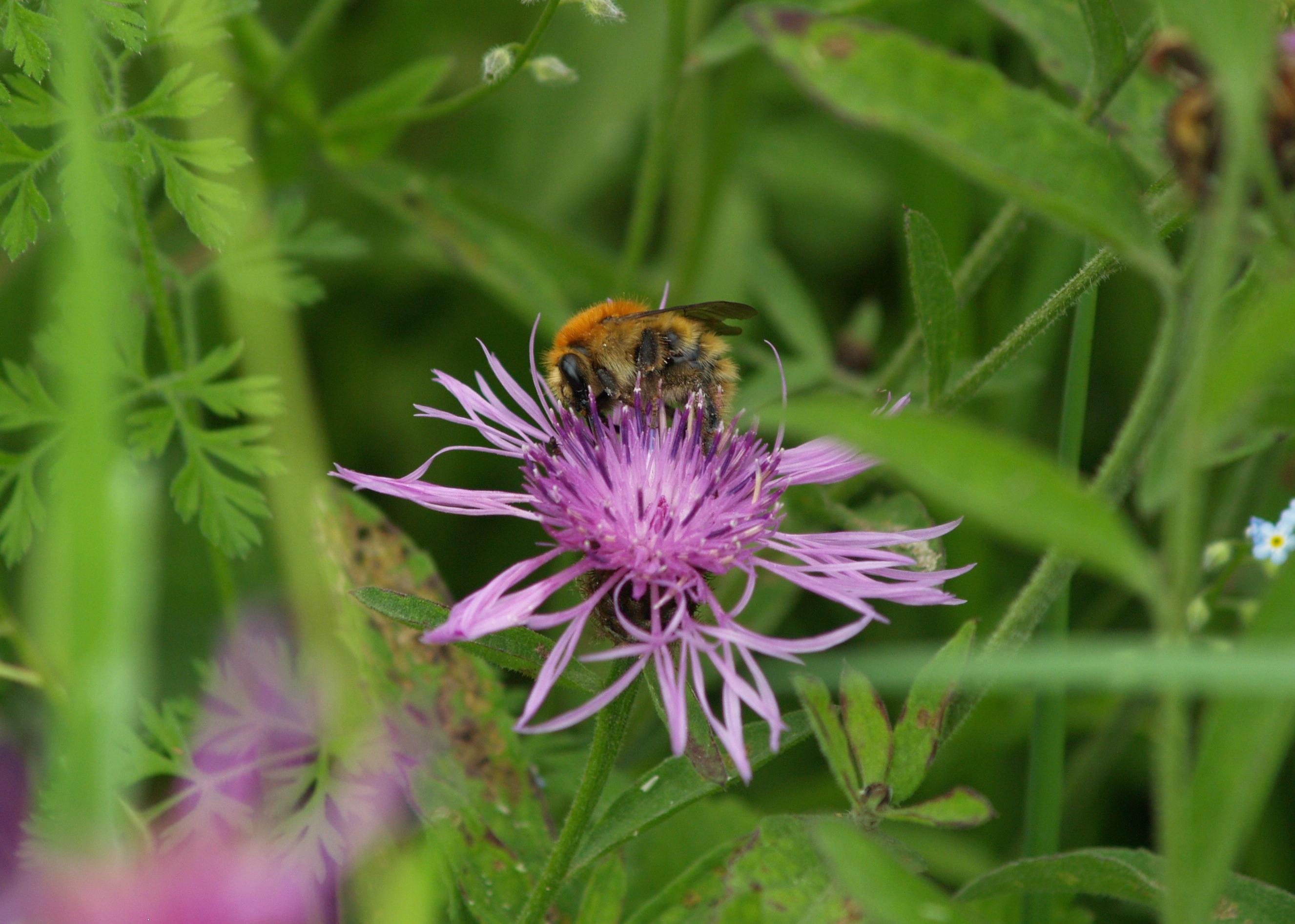
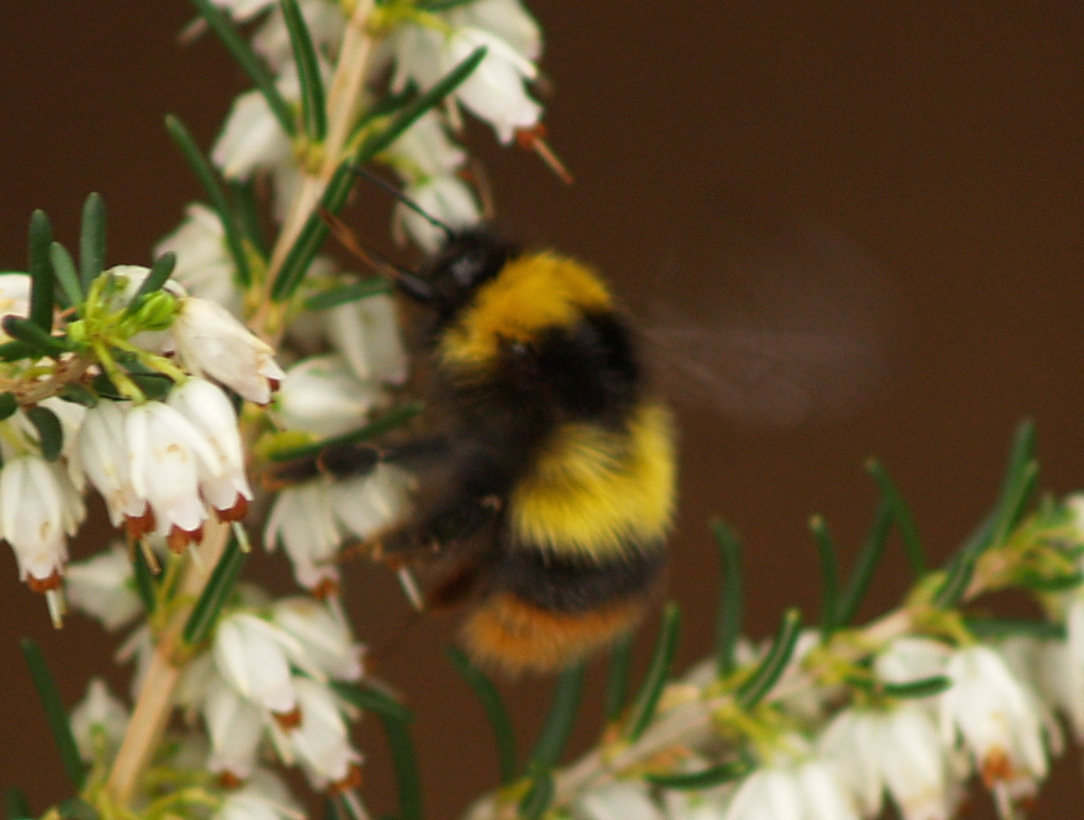
Bombus pratorum belongs to the subgenus Pyrobombus. The queens are relatively small and one of the earliest to appear each year (as the name might suggest). Queens pop out with regards to colours as the orangey tail makes them look a bit darker and more drab when compared to the whitish tailed bumblebees that are also out. The yellow bands are a crisper colour yellow.

Early Bumblebee (queen) on an unknown plant in Cantabria, Spain.

Males are fuzzy balls of yellow, with yellow hairs on their heads and with an orangey tail.
I have yet to see a worker.

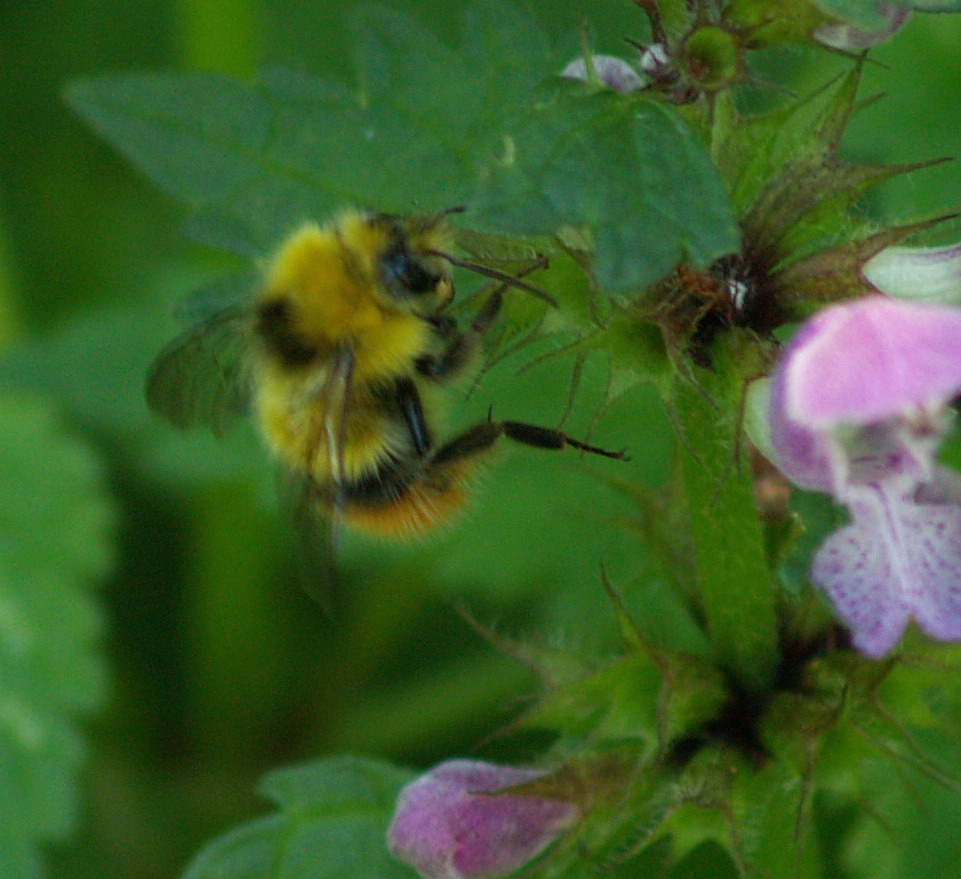
Early Bumblebee (male) on a dead nettle (Lamium sp.) in Cantabria, Spain.

The subspecies B. p. santonae can be found on the Iberian peninsula, but I have no idea what the differences are, but it is the only subspecies found here. If I compare my pictures with those found in the Falk link (see below) then here the bees have more extensive yellow bands.
There is conflicting information on this subspecies and I do not really know which is correct. Some sources state that this is a higher altitude species (500m+ above sea level), but I’m at around 100m. However, I do not know which other species it could be (see Complicating Factors below). Furthermore, there are very few pictures on the internet.

The one thing that could help me out it a book called Fauna iberíca. Vol. 23. Hymenpotera: Apoidea 1 by Ortíz-Sánchez and Ornosa, but it is costly and in Spanish.

Sigh, bees are not that well detailed in Spain as butterflies are and information is difficult to obtain. Once I find out more I’ll post a follow-up article, as this one’s pretty poor with regards to actual information! haha

Complicating Factors
So, not only is it difficult to find out what B. p. santonae actually looks like, but apparently the subspecies of the Red-tailed Bumblebee (B. lapidarius), which is called B. l. decipiens, has the same colouration in queens! However, they are also normally found at higher altitudes (apparently) here and queens emerge much later (May). Furthermore, they are bigger, but this is something you can only really pick up once you have gained quite some experience out in the field. After only one summer season, I am still far from that required level.

So, I guess the bumblebees I’m seeing are Bombus pratorum santonae, but at the moment I cannot be 100% certain. All I know is that the UK situation is a lot simpler.

Further Reading
– Here is a link to Steven Falk’s Flickr page, lots of good pictures and basic info. He has a good book out on Bees in GB & Ireland!
– A link to P. Rasmont’s page with a distribution map and some other basic info.
– A link to the Natural History Museum page that gives an overview of the colouration of the Early Bumblebee.
– A link to the IUCN page. Great site.
– The Bumblebee Conservation Trust is a great organisation, especially if you live in the UK, they’ve got a helpful site for the beginner and also a place to upload photos and ID other people’s photos. I’m a member even though I live abroad.
– There’s a cool app for the iPad/iPhone by NatureGuides with great drawings. I’ve got the Pro version which has been a good resource for info.
– Dave Goulson’s A Sting in the Tail is a fun read about the world of bumblebees.
– My sightings to date on Observation.org of this species in Cantabria.

Bee-news – Early Bumblebee – Bombus pratorum (Linnaeus, 1761)

Proyecto Lepides – Recorrido A, 30TVN09, Casar de Periedo – 15.03.16

Introduction
It had been raining on a fairly continual, daily basis since the 21st of February. I spotted two good days in the weather report, the Monday and Tuesday and so decided to go the second day to give the butterflies a chance to warm up. I’d been out walking during some overcast, and quite fresh, days previously and had spotted around 5 species of bumbelbee. I was quietly hoping for an eventful early afternoon …

Recorrido A – 15.03.16 – 30TVN09, Casar de Periedo
When I headed out at around 13:00, the thermometer read 14C and the sun was out without a cloud in the sky, though it was slightly hazy and there was a little breeze (from east to west) that made it fairly chilly in the shade. By the time I got home 2 and a half hours later it was at 15C with the rest still the same. I got home with a very light sunburn actually, hadn’t expected it to be so sunny throughout.

The fields were quite wet, there was a lot of squelching every time I stepped off the track. My first butterfly was again a Red Admiral (Vanessa atalanta) in the same area where I saw one the month before, this time it was flying around actively and chased another butterfly (uncertain the species). A little later, as I was looking intently into some shrubs as I through I saw a snake or large lizard a Small White (Pieris rapae) bobbed by (took care to ID it by looking at the hindwing underside – more on this later).

I still had a lot of ground to cover so off I went. However, as I went on it started to dawn on me that my hopes for an eventful (in the positive sense) afternoon would not come to fruition. The first was that I hardly saw any Speckled Wood (Pararge aegeria). This does not happen often, as they are usually everywhere. The road along the edge of the woods had the usual butterflies on offer, but I couldn’t help but feel slightly disappointed. I’d been hoping for a first blue or something special, but alas.

What I did see a lot of was Pieris napi (Green-veined White) … last year they had been so plentiful throughout that I grew a bit tired of seeing so many. And here they were, out in great numbers already! But every butterfly counts and this is my 10th species of the year. Although, from now on IDing will be a task between Pieris rapae and P. napi, as they are fairly similar and you have to spot the underside to make sure. P. napi have an extensive range of uppersides here, with regards to black markings so IDing them in flight is difficult. The two species also have a different style of flying, but I’m not yet there to distinguish them in that manner, will probably get the by the end of this year though as both are really common here!

The frustration came in not being able to positively ID a Cleopatra and also in seeing one butterfly that flew very distinctly to those I see here and which I could not follow (maybe a Small Tortoiseshell?) well enough with my binoculars and I tried to spot it landing in the distance.
Oh and not one photo ended up being usable.

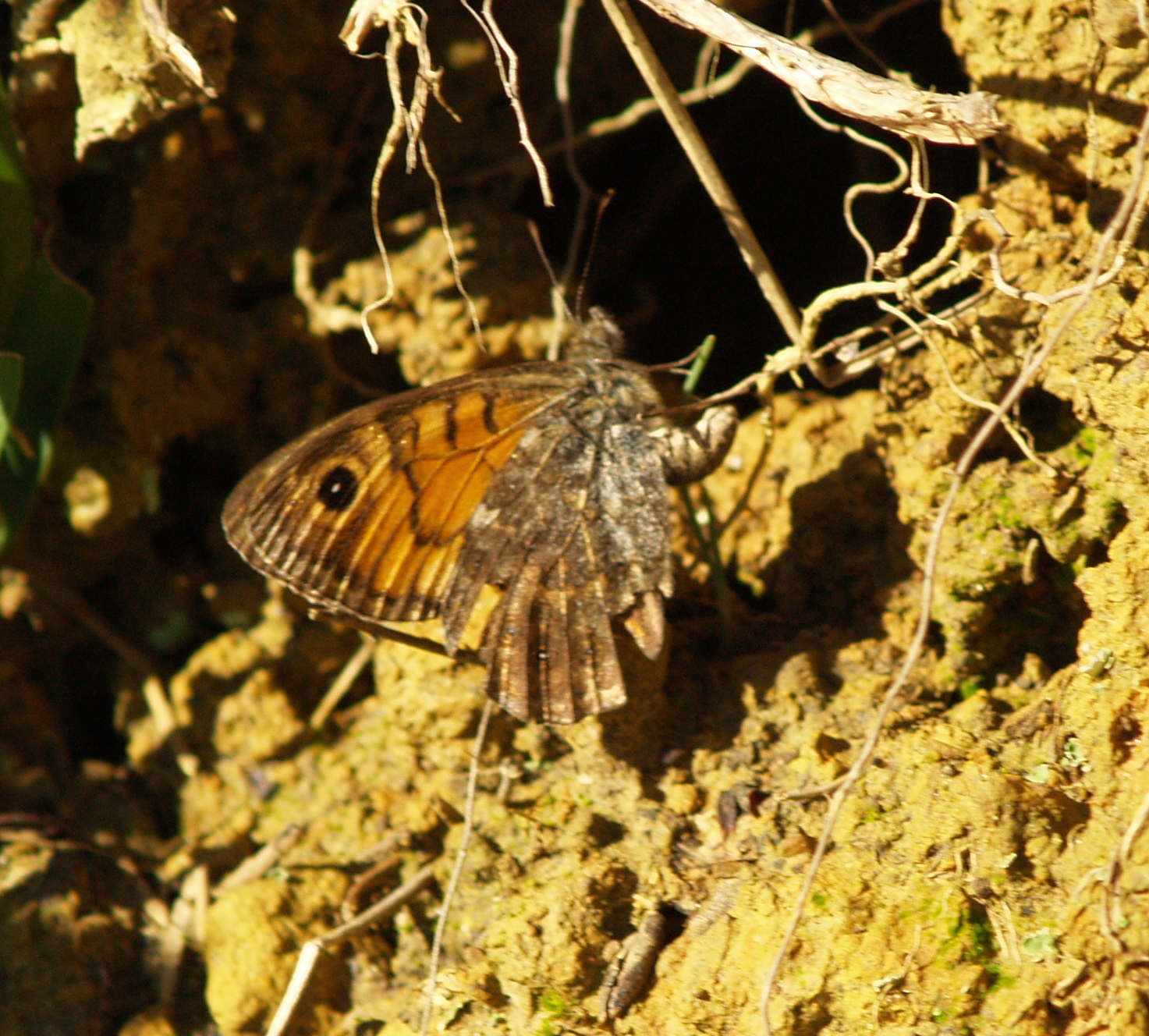
The day ended me one neat ID, a Wall Brown (Lasiommata megera) that I just spotted as I came out of some scrub and climbed up a bank onto the gravel road. Not the most common of butterflies around here.

The denouement came at home, when I took of my sweater in the kitchen and off fell two ticks! That’s what you get for trouncing around the scrub. Luckily none had found a way into a nice spot to bore into my skin, but I’ll have to be more careful the next time around.
Hopefully, with a few free days ahead I’ll be able to catch up on some species entries. Up next a bumblebee of the spring season …

Summary
Vanessa atalanta — between 3 to 5.
Pieris rapae — 2.
Gonepteryx rhamni — around 15 in total.
Pieris napi — stopped counting after 20 (first of the year on this transect).
Colias croceus — 2.
Pararge aegeria — 5, a lot less than normal.
Aglais io — 1.
Lasiommata megera — 1.

Species year total — 10 (2015 – 45).

Further Reading
– My sightings for the day on Observation.org.

Proyecto Lepides – Recorrido A, 30TVN09, Casar de Periedo – 15.03.16

Proyecto Lepides – Recorrido A, 30TVN09, Casar de Periedo – 13.02.16

Introduction
When I woke up, at around 7am, it was still fairly dark out but I could see if would be a nice morning. By 10am I was ready to go and knew that I’d still have a window of sunshine before the rain would come back. Since the start of the month it has been raining almost non-stop.

Recorrido A – 13.02.16 – 30TVN09, Casar de Periedo
The weather was quite good to start with, I didn’t need to wear a sweater. It was sunny with no clouds in sight and no wind at all, at 10am it was 14C. About halfway it was probably up to 17C or so, but towards the end of the route, the wind picked up a bit (not too much) and there was a lot of cloud cover all of a sudden, was back down to 16C when I got home around 12 noon. A little while later the rain was out (in good amounts too!).

I wasn’t expecting much … the rain had been almost constant over the previous days and the ground was really soggy everywhere in the fields. I stopped to look at some birds, when I spotted something dark flittering through this strange soggy/grassy area … I quickly aimed my binoculars in the distance and as I was focusing in saw flashes of white on the wing-tips

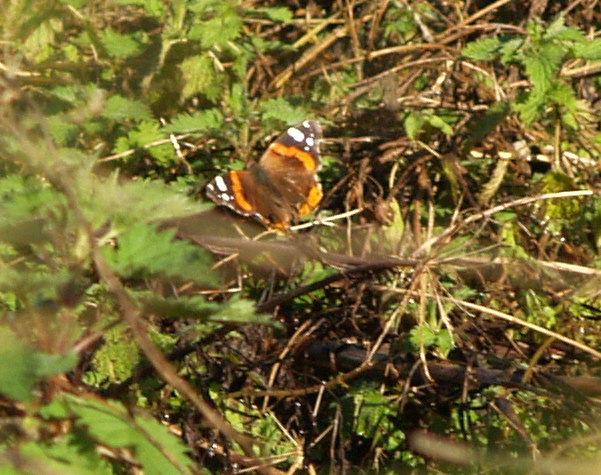
Red Admiral in Cantabria, Spain. 13.02.16

… I instantly recognised this from the previous year … Vanessa atalanta (Red Admiral) … the butterfly dipped behind a large tussock of grass and so I dived into the soggy field to get confirmation (mostly for myself, as I really like to be sure about an ID, especially so early in the year). With some difficulty I was able to get a couple of bad photographs in (that thankfully do show the required characteristics) for a positive ID.


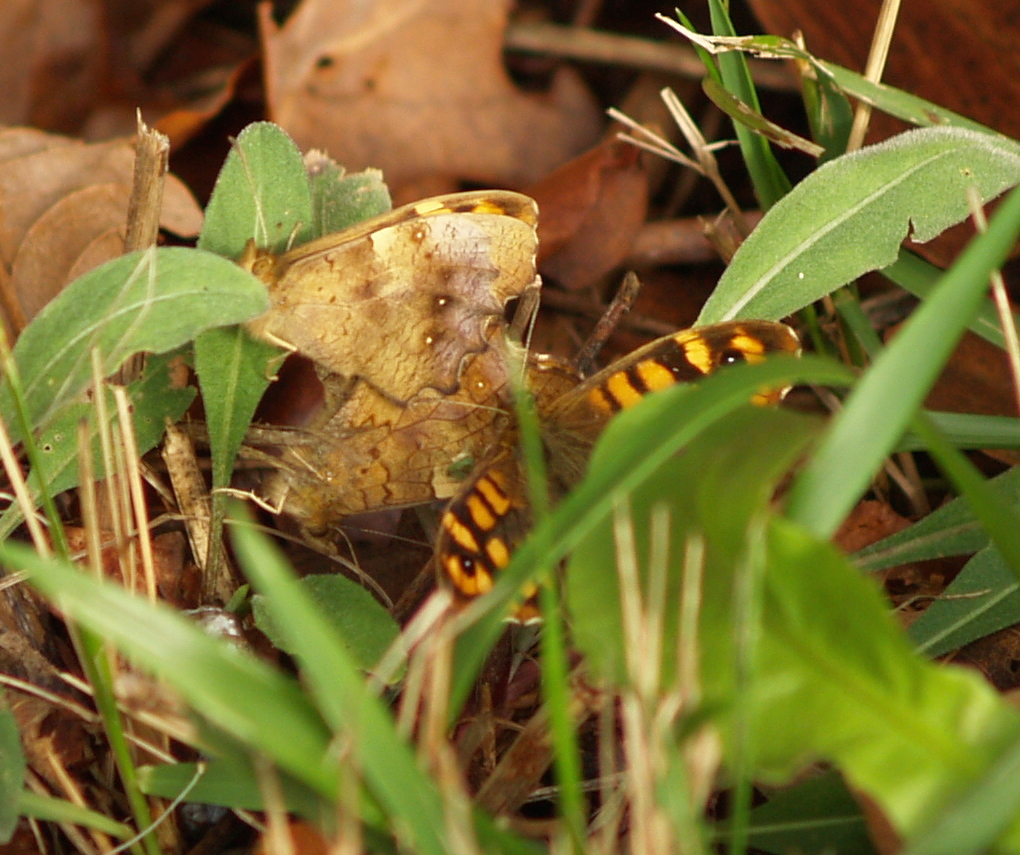
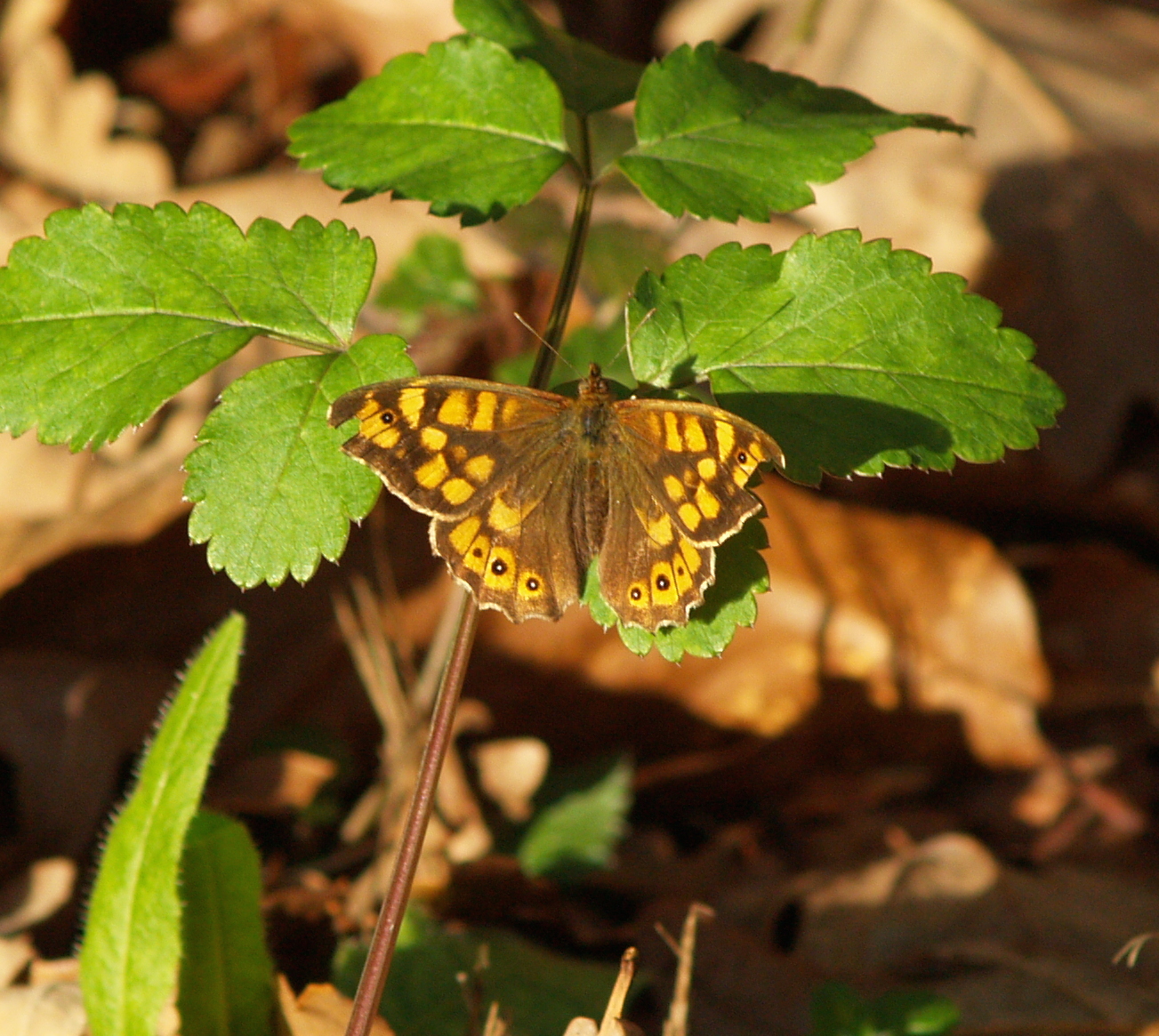
After a short while there were three in fairly quick succession along the route (I took a 15 min. detour to see if I could buy something for my son at the gas-station) and those were the regular patrons along the transect; Gonepteryx rhamni (Brimstone), Pieris rapae (Small White) and Pararge aegeria (Speckled Wood). At one point I’d seen so many Speckled Wood that I stopped counting, I also didn’t take pictures anymore, they were just everywhere. Although, I did take one funny snapshot of a copula and a male sitting on the two, waiting.

Speckled Wood in Cantabria, Spain. 13.02.16 - copula + male
Speckled Wood in Cantabria, Spain. 13.02.16 – copula + male

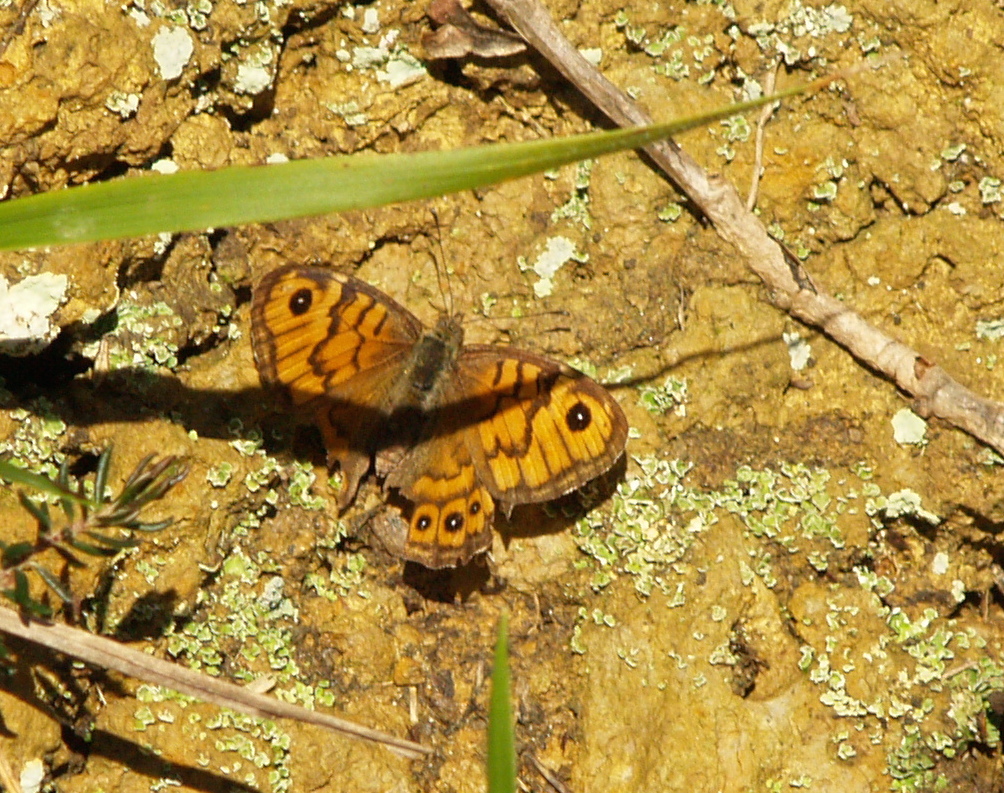
It was at my favourite spot along the transect that I spotted something odd … I thought it was a Speckled Wood by the general colouring, but I found it strange that the butterfly was so small (max. 2/3 of what I’d normally expect) and it was behaving in a strange manner. It hugged along a vertical embankment along the road, stopping here and there, usually under grass, twigs etc. What was this? I took many pictures, hoping to get an underside picture, but that proved very difficult (though in the end I managed it). I had an idea what it might be, but I’d only seen this butterfly once before and it had been exceptionally difficult to photograph too. Later when I got home I conformed my suspicion … Lasiommata megera (Wall Brown) … and I also saw that she was placing eggs (or so it seems!). I cursed that I hadn’t picked up that detail in the field.

Wall Brown in Cantabria, Spain. 13.02.16
Wall Brown in Cantabria, Spain. 13.02.16 - underside.
Wall Brown in Cantabria, Spain. 13.02.16 – underside.

I continued on, within a minute both a Colias croceus (Clouded Yellow) and Aglais io (Peacock) flew by at great speeds. Luckily those are fairly easy to ID in flight, especially as the Clouded Yellow was a male. A week earlier, on a walk nearby I’d been surprised to see a Clouded Yellow … I’d been pushing the stroller, looking at the ground and spotted a strange yellow leaf, strange as everything else was brown in mud, fallen leaves etc. I was able to get really close to it (was practically next to me anyway when I walked past it) and got some good pictures.


On I went, looking at butterflies through my binoculars, checking out the Buteo buteo (Common Buzzards) circling overhead … and then, as I was looking at a Brimstone (or so I thought) zip by I noticed flashes of orange … wait a minute … Brimstone don’t have orange, but Cleopatra do! I jogged along after it till it settled down (luckily not far off) and took some pictures. I also made sure to take one just as it set of for its next short journey, the flash of orange was clear on the picture, Gonepteryx cleopatra (Cleopatra), my first confirmed ID of this species by photo.

Cleopatra in Cantabria, Spain. 13.02.16


Picking up the pace a bit I headed home, the wind was picking up and it was starting to feel a bit chilly (had left my jacket at home), but was happy that I’d spotted a new species (the Cleopatra) for the UTM square I am monitoring.

Summary
Vanessa atalanta — 1 (first of the year).
Gonepteryx rhamni — around 10 in total.
Pieris rapae — 3.
Pararge aegeria — I stopped counting after 20 … maybe 30 in total?
Lasiommata megera — 1 (first of the year).
Colias croceus — 1 (I’d seen one a week earlier but not along this transect).
Aglais io — between 10 and 15 in total.
Gonepteryx cleopatra — 1 certain, probably 2 (first of the year).

Species year total — 9 (2015 – 45).

Further Reading
– My sightings for the day on Observation.org.

Proyecto Lepides – Recorrido A, 30TVN09, Casar de Periedo – 13.02.16

Butterfly Bulletin – Dryad – Minois dryas (Scopoli, 1763)

Introduction
As I stated in a previous post, butterflies are one of the drivers behind this blog. So, I thought I’d start my Butterfly Bulletin posts off with one of the most spectacular species I managed to see in 2015 … and that I hope to see many more times.

Mid-August I was out with my oldest son, we had gone for a walk (him in the stroller) around his siesta time so that he could have a bit of a rest, the new addition to the family (at that time around 1 month old) was tiring us all out a bit (i.e. lack of sleep) … so I decided to walk Recorrido A of my volunteer walks for Proyecto Lepides.

With my son snoring away we’d reached the back part of the route, with a south facing hill covered with trees on one side of the road and fields on the other. I was just rounding onto that stretch of paved road when out of the corner of my eye I noticed something dark and big flopping around in the field to my right. I pushed the stroller to the bank-side (son facing the field in case he woke up), put on the brakes and dived into the field, camera at the ready …

Dryad
A few quick shots of the camera and I knew I was onto something interesting … while going through my Tolman/Lewington guide (Collins, 2009) during the previous winter months, Minois dryas had been one of the species that I’d marked as hoping to see. I had no idea that this was a fairly rare species (not that clear in the field guide) in this part of its range. In general, the Dryad can be found across a band stretching across the central area of Europe and further on to Japan even. There is a slight sliver of its range that hugs the northern coast of Spain from País Vasco to Asturias (the Cantabrian Mountains). The Dryad can be found between 100-1600m in grassy and bushy margins of mixed deciduous woodland, often in damp places … the field I found her in (turned out to be a female) was thus the perfect habitat, all be it slightly below the altitude range (by about 10m).

When I spotted the butterfly, it was flying just above the grass, not in any determined fashion, but more floppily. As I entered the field it settled down in the grass (my first photos were from a side angle, see below), I slowly circled around a bit so that I could get a picture of the fully open wings. She just sat there, relaxed. I was able to creep a bit closer, but I almost always remain at a distance so no to disturb the butterfly, I did so here too. When I was satisfied I’d taken enough photos I headed back to the stroller. As I walked off I glanced back several times and she remained where she was.

Dryad in Cantabria, Spain. 16.08.15

Minois dryas has big oceli on the fore and hind wings that have a beautiful tings of blue to them. The one I saw was a bit “beaten up” with arts of her wings missing etc. and so the blue was not as vibrant anymore, still a great sighting and one that will stay with me for quite a while. The female is larger than the male and also has colours that are not as vibrant in general.
It was only when I was uploading the photos and data at home that I realised how special the sighting had been in a general sense.

A few months later, I went to a small exhibition, in a nearby village, on butterfly photography. The museum in which it was held also has some cabinets filled with pinned butterflies. These have been donated by a local lepidopterist. There are many tropical species but also regional species. There were around 4-5 examples of Dryad pinned, each with a tag noting year and region … they were all from the early 2000s (maybe a couple from the 1990s or earlier, cannot remember exactly). The location for all was Novales, a village/area on the other side of the large hill (extended hilly area) to the north …
Will I see this species again in the future? There’s a reasonable chance … maybe she laid eggs somewhere nearby … but, I probably won’t be as lucky as this anymore and will have to put in a lot more effort …

Dryad in Cantabria, Spain. 16.08.15

Oh, this butterfly is not on any red list in Spain, but it should be, as it seems to be fast disappearing due to changes in agricultural techniques.

Further Reading
– A PDF with specific distributions of various Satyrinae in Spain, Minois dryas is in that family. In Spanish but easy to understand for non-Spanish speakers.
– A list of my sightings of this butterfly on Observation.org.
– All butterfly sightings in Spain as recorded through Proyecto Lepides.

Butterfly Bulletin – Dryad – Minois dryas (Scopoli, 1763)

Book Club – A Buzz in the Meadow by Dave Goulson

Introduction
This is actually the second book I’ve read by Dave Goulson, however, it is the one I’ve finished most recently and hence will cover the other book (A Sting in the Tail) at a future date.

As for other books to come through the review, over the past couple of months I purchased some field guides and natural history books, and am currently reading John Fowles’ The Collector, which is maybe not directly a “nature” book but is pretty good and about a butterfly collector, sort of …

Comments
As I stated above, this is the second book I’ve read by Mr Goulson. It is also his second book and follows up nicely from the first with many links between the two.

In 2003, Mr Goulson purchased a farm in France that came with 13 hectares (130,000 m2) of land. Since then he’s been working on the buildings and slowly letting the land get back to a more natural state of flowery meadows … although he has created a little brook and pond to attract wildlife that needs water (e.g. dragonflies). The main thing is that he’s letting the land recuperate after being fertilised and treated with pesticides etc. throughout the time that it was “productive” land for the farmstead.

The book is divided into 3 sections. The first (and longest) consists of 9 chapters covering the animal (mainly insect) life to be found around the farm. This includes bees, butterflies, dragonflies, beetles, newts etc. Birds aren’t really covered. The second section (3 chapters) is about plant life and the last section (also three chapters) is how the natural world is interlinked and what man’s effect has been on that natural world.

Each chapter starts on one topic, but often it meanders from there on, going from one related subject to the other. It is like listening to someone extremely knowledgeable on a multitude of topics and that person is excited to tell you something and then he or she just continues talking and you have the feeling they can go on for ever.
Mr Goulson has a pleasant manner of writing, which explains everything quite clearly and thus it becomes quite fun to read the book. So much so that at times I had to stop myself from reading, as there is an overload of information and it becomes impossible to remember all that is told. In other words, I’ll probably re-read chapters on specific topics in the future to remember what was said.

I enjoyed this book and it inspired me, but hey, I was probably going to enjoy the book anyway considering my interests … It was a fluid read, even though some subjects can be quite scientific, but it is never boring. The only thing is that I sometimes longed for more, but I think this is inherent with nature, in that it will take many more years before the farm gets to full potential and Mr Goulson discovers all the interesting things happening in the fields, as everything needs time to adapt, change and grow. For example, he’s doing an experiment over various plots (to do with growth of plants), but it a will take many seasons before the results are finally known and a bit more conclusive. I can easily see a “part two” in 10 years time to give us an update on how the farm’s changed.

The Edition
Title: A Buzz in the Meadow: The Natural History of a French Farm
Author: Dave Goulson
Publisher: Picador
Year: 2014
Edition: Hard cover, first US edition (2015), 1st printing, 265 pages
Additional Info: Includes index.

Further Reading
– Dave Goulson’s Twitter page.
– Mr Goulson’s page at the university where he works.

Book Club – A Buzz in the Meadow by Dave Goulson

Proyecto Lepides – Recorrido A, 30TVN09, Casar de Periedo – 23.01.16

Introduction
One of the reasons for stating this blog was because in June 2015 I became a butterfly “counting” volunteer with Proyecto Lepides, a Spanish organisation similar to Butterfly Conservation in the UK, but then on a small scale (at this moment in time anyway). The goal is to be able to create a map of Spain for all the butterfly species that fly here. Will write more on the organisation in a later post.

As volunteer, I walk a number of transects (recorridos in Spanish) within the 10km x 10km UTM square 30TVN09, which lies in the northern Spanish province of Cantabria (handily I live in the UTM square I monitor).
A few days ago was the first time in 2016 that I walked the transect hoping to spot some butterflies … below is an account of what I saw.

Recorrido A – 23.01.16 – 30TVN09, Casar de Periedo
The weather was quite nice for this time of year. I’d usually expect temperatures around the 5-10C with clouds and rain. It was around 19C when I headed out (2PM) and it was sunny with no clouds in sight. To top it off, there was zero sign of wind … basically the perfect weather for a spring day of butterflying, only it was still winter …

As I walked down the first stretch of dirt road I suddenly spotted my first butterfly of the year, a white one zipped by, heading south. I whipped up my binoculars, but could not get a clear ID. I could only make an educated guess of Pieris rapae (Small White), which are very, very common in this area. It did provide hope and … A short period later my second butterfly, again I could not be 100% sure and my best guess for the streak of yellow flying south was Gonepteryx rhamni (Brimstone).
I had hope I’d see more, but kept my fingers crossed they’d not all be in a rush to get somewhere I wasn’t going.

I was on a small tarmac road and I turned onto the road that runs along the bottom of a hill … full in the sun at the bottom of the south facing slope, perfect. This is my favourite stretch of the transect and I knew that the next 500m would be crucial if I was to head home with a positive ID.

Peackock in Cantabria, Spain. 23.01.16
Peacock in Cantabria, Spain. 23.01.16

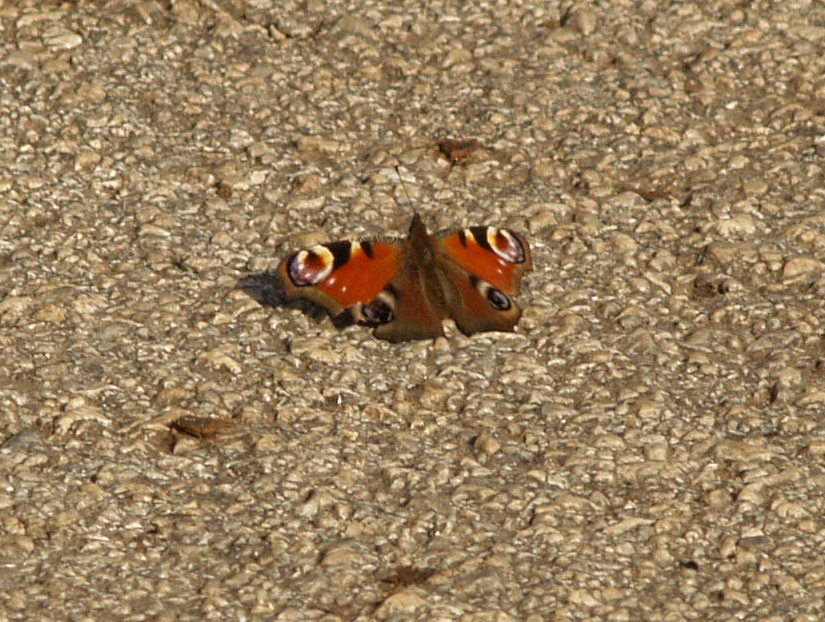
Within a couple of steps I got it … zipping around my head a really dark butterfly. I watched it bob up and down and twist around before settling down along the side of the road … in flight you always notice the deeply dark undersides and when they land, out pop the eyes … even without my binoculars I could see it was an Aglais io (Peacock) … my first certain ID butterfly of 2016 was the exact same as that of the previous year! It sat there, full in the sun and I took a few quick photos before heading further down the road.
The road was now flanked by trees on both sides (not only the hill to the north) and within some of the splotches of sun shining through the trees I saw the second species sitting sunning itself … within seconds it was joined by 2 others and the three battled a bit for the rights to the sunny patches … the ever present Pararge aegeria (Speckled Wood).
When I got to my absolute favourite spot on the route I stopped to take a closer look at the surrounds … nothing … when I headed further, 5 minutes later, I hadn’t started walking before I saw a tiny dab of grey shakily fluttering about … Cacyreus marschalli (Geranium Bronze), an invasive species from South Africa. What was it doing so far away from the village where I usually saw this species?

Speckled Wood in Cantabria, Spain. 23.01.16

And then I came to butterfly heaven on that day … every 20m or so I’d spot another Speckled Wood sunning along the sides of the road. However, just before I turned back onto the dirt track … there they were … everywhere I looked more and more Peacock butterflies, mostly drinking nectar from dandelions (Taraxacum spec.) or sunning on the warm road. Zipping around me, it was kinda crazy. I’d only seen this many at one time when I saw them as caterpillar.
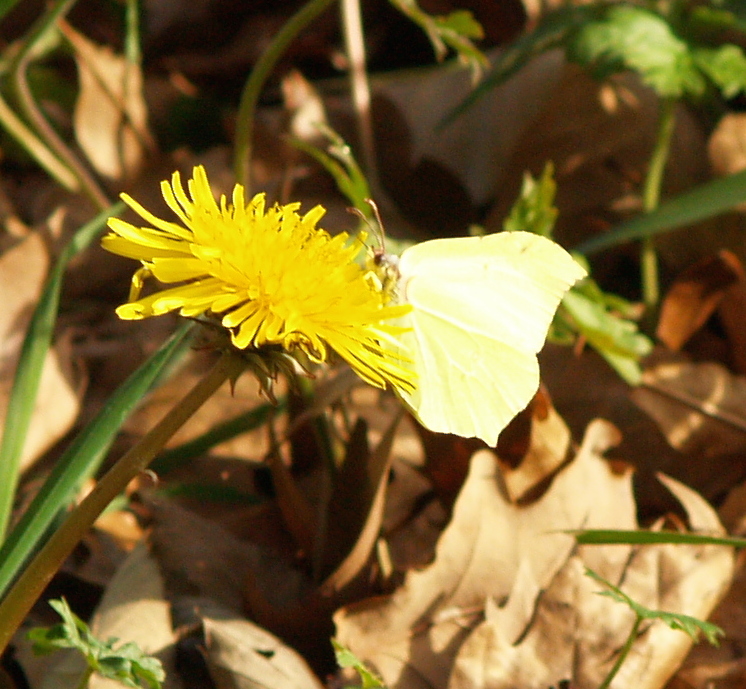
As I was enjoying the spectacle I saw a big fat yellow butterfly drinking from a dandelion … yup, this time I knew it for sure, a Brimstone.Then when I turned onto the dirt track a white butterfly came zipping by and landed on a dandelion nearby … I just had time to take a couple of pictures for a positive ID at home … Small White.

Walking down the dirt track, slowly on my way home I marveled, 5 species in January, nuts. I looked back and could see tiny specks of white zipping between the trees where I’d just been standing … but I had to head home, my oldest son was waking up (I’d been pushing him in the stroller during the walk … siesta time for him).

Other insects seen … Bombus terrestris/lucorum and Apis mellifera.

Geranium Bronze in Cantabria, Spain. 23.01.16
Brimstone in Cantabria, Spain. 23.01.16

Summary

Small White in Cantabria, Spain. 23.01.16

Pieris rapae — 1 certain, 1 probable.
Gonepteryx rhamni — 1 certain, 1 probable.
Aglais io — between 10 and 15 in total.
Cacyreus marschalli — 1.
Pararge aegeria — between 10 and 15 in total.


Further Reading
– My sightings for the day on Observation.org.
– Proyecto Lepides blog entry for January 2016. Summary of butterflies seen in Spain during January.

Proyecto Lepides – Recorrido A, 30TVN09, Casar de Periedo – 23.01.16

Book Club – The Butterfly Isles by Patrick Barkham

My primary hobby is reading, always has been and always will be. Any non-fiction is often associated with other interests and hence I’ve been reading books on various natural history topics recently to help build up a knowledge base that can aid me when I can go out into the field. The books I’ve been reading are not only the essential field guides that will help me identify what I see, but I’ve also been reading some that fall into the, currently hip, category of nature writing.

Introduction
In recent years there has been an explosion in books with nature seen from the personal perspective of the writer. Of course this type of book has been around at least since Henry Thoreau’s Walden, so is nothing new, but the sheer number since around 2003 has been astonishing. Usually the author goes on a journey of self discovery while at the same time offering the reader insights into the complex nature of the natural world. This can be done through a literal journey (think A Walk in the Woods by Bill Bryson (1998)) to focusing on one animal (for example the award-winning H is for Hawk by Helen Macdonald (2014)).

The Butterfly Isles is Patrick Barkham’s first novel. He has since gone on to write Badgerlands (2013) and Coastlines (2015), all of which fit nicely into the category of nature writing. I should say, I’ve not read any of his other work, but am keen to read Badgerlands.

The Butterfly Isles covers Barkham’s attempt to see all 59 butterfly species in Great Britain during the spring and summer of 2009. The book is written in a reasonably chronological order. It focuses on various species as he spots them flying in their habitats and also covers Barkham’s own fascination with butterflies that he developed through his father’s keen interest in them.

Comments
My main reason for reading this book is that I wanted to get a feel for butterfly behaviour. I’ve only been looking for butterflies since this past April and I just record what I come across on my walks through the fields here, not really making much of an effort to find out where there might be some special areas to see rare species. I wanted to know how a butterfly aficionado goes about doing such things.

Well, Barkham had not really been active with regards to butterflies when he wrote the book. His knowledge was mostly based on his past forays with his father. Hence he calls in the help of Butterfly Conservation members across the UK (something I cannot quite do, nothing much in the vein of butterfly conservation here in Cantabria). Barkham should count himself lucky in that respect.

Anyway, some great things about the book is that for many species Barkham does cover quite a few interesting details, about how the name came about, how the species has managed to survive in the UK through the butterfly hunting ages etc. There’s also a map showing locations, an extensive appendix that includes directions to specific sites, web sites, a bibliography, a good index etc. I would say this is critical in this type of book so you can go back for specific information at later stages after your read the book and want to go spot some of the species covered.

Barkham’s manner of writing is also quite engaging. It is clear he is passionate and that pulls you through the book, though it probably does help that I’m interested in butterflies.

There are 3 little nitpicky negative points to the book:
– The stuff about the relationship with his girlfriend (Lisa) does not really add much at all, if anything. Sure butterfly watchers are geeks and it can become an obsession to go out searching for new species, but Barkham gives ample evidence of this without the need to drag us into his personal life … I actually started to get irritated at his (in my opinion) selfish girlfriend … obviously you don’t get the whole story and it cannot have been that bad as they get together, marry and have kids (this last is a deduction and not specifically in the book).
– At one point he’s writing away mentioning the Large Skipper (Ochlodes sylvanus) and I think … hold on a sec., he hasn’t given any type of intro etc. to that species and here he’s glossing over it like it is nothing and he’s seen millions. About 100 pages later he has a couple of paragraphs that go back in time and then you realise that he then describes seeing this butterfly for the first time in 2009 and thus checking it off his list. The rest of the book is in reasonable chronological order, why not here? The passage later does not fit in the story well at that point so why not leave it in previously? Dramatic effect?
– The Ringlet (Aphantopus hyperantus) hardly gets two lines when Barkham first spots one and never gets a good introduction … they may be common in the UK but it is one of the species that I’m aching to see here! There are tantalising hints about what I might look for, how it flies, the habitat you can find one in etc. but I was hoping for more.

Anyway, apart from the 3 (personal nitpicky) points this book is pretty good and quite a fun read. As I said before, I’m keen to read Badgerlands now and his other books (Coasts and the upcoming Islands) would be a good read at some point in the future.
I can recommend The Butterfly Isles to anyone living in the UK (learn something about your countryside and what lives in it) or someone who may be interested in learning about the natural world around them, and not only about butterflies but how the views of that natural world have evolved over time.

The Edition
Title: The Butterfly Isles: A Summer in Search of Our Emperors and Admirals
Author: Patrick Barkham
Publisher: Granata Books
Year: 2010, paperback 2011
Edition: Paperback, first edition, 3rd printing, 372 pages
Additional Info: Line drawings by Helen Macdonald.

Further Reading
– Patrick Barkham is a journalist for The Guardian newspaper (UK) and is a regular contributor with pieces on natural history. An overview of his articles.
– Patrick Barkham’s Twitter page.
– Patrick Barkham’s page at Granata Books. Not the most up to date, as the Coasts book is out and he’s working on one called Islands.

Book Club – The Butterfly Isles by Patrick Barkham

Bee-news – Common Carder Bee – Bombus pascuorum (Scopoli, 1763)

I was not sure with which insect/animal I’d start off the blog, but have decided to go with the Common Carder Bee (Bombus pascuorum). Since I’ve been out and about in nature (start of 2015) and recording what I see … well, to the extent that I record what I know about and what interests me … this little bumblebee has been present throughout. I first saw one mid March and have seen them around till now (October). Furthermore, I’ve seen them in all types of environments, from in the city, to near the coast to the farmland around our house. So, without further ado …

Introduction
Bumblebees are social bees that form small hives of 50 to maybe 250 individuals, depending on the species. These bees are usually recognised by their roundish, compact, hairy bodies and can be anywhere from around 10mm to over 20mm in size, the larger forms being some of the larger bees you’ll see around and thus when they land on certain flowers the stalks will bend due to the weight of the bee.

Carder
Carder bees are a group of bumblebees that (subgenus Thoracobombus) usually build their nests in grasses etc. near the ground. The nests are built of mosses and such materials. The name carder comes from the term carding in wool-making, which is the separating and cleaning of the wool fibres. The bees do a similar action with their rear legs in taking moss and such.
Here in Cantabria there are a possible 9 species of carder bee present. I’ve seen 4 of which the Bombus pascuorum is by far the most common. 4 of the species are on IUCN’s Red List with a category of Near Threatened or worse, one of those is also on Spain’s Red List as Vulnerable.

Common Carder
So, yes, the Common Carder is quite common, and here too. It is the one little bumblebee I can rely on seeing when going out. One of the reasons why it might not be as famous as the black and yellow cousins is that the colour is a gingery brown, not something that flashes between all the flowers that it visits … as it visits all types of flowers, both for pollen and nectar.
There are 23 subspecies (ssp.) of B. pascuorum and I’m not quite sure which can be found here, more research to do on my part … I think B. p. dusmeti and/or B. p. maculatus, but don’t quote me on that and I don’t know the differences.
One of the things that makes identification difficult is that these bees look quite similar to Bombus muscorum (Moss Carder) and Bombus humilis (Brown-banded Carder) and I’ve seen both those around here too … therefore, when spotting a fresh Common Carder looking bee it takes a clear photo etc. in order to really ID it properly, the other two bees are quite rare. The Common Carder has more black hairs on both the thorax and abdomen. Also you can approach these bees quite closely and really get down to have a good look as they are rummaging about in a flower. Sometimes they are a bit in a rush, but if you’re lucky it is just slowly moving from flower to flower and there will probably be others around so you can just sit and wait for them to come to you. A good sized bush of Lavender is great as they love it (as do other bees and insects!). There is a park in Santander (Las Llamas) where they have huge stretches of lavender … on sunny days those flowers are covered in bumblebees including some Common Carder (however, Buff-tailed Bumblebees (Bombus terrestris) were more common when I was there this past summer).

I’ll post a couple of pictures of Bombus pascuorum bees from around here, however, for this bee other sites (see below) are better to really get a good idea how to properly ID one.

Common Carder on a type of Knapweed (Centaurea spec.) in Cantabria, Spain.
Common Carder on an unknown plant in Cantabria, Spain.
Common Carder on a type of Betany (Stachys spec.) in Cantabria, Spain.

Further Reading
– Here is a link to Steven Falk’s Flickr page, lots of good pictures and basic info. He’s got a book coming out in a week (early November 2015) or so on Bees in GB & Ireland!
– A link to P. Rasmont’s page with a distribution map and some other basic info.
– A link to the Natural History Museum page that gives an overview of the colouration of the Common Carder Bee. I love how they’ve created the images, can at times be better than a drawing. The site can be used to compare different bees’ colourations.
– A link to the IUCN page. Great site.
– The Bumblebee Conservation Trust is a great organisation, especially if you live in the UK, they’ve got a helpful site for the beginner and also a place to upload photos and ID other people’s photos. I’m a member even though I live abroad.
– There’s a cool app for the iPad/iPhone by NatureGuides with great drawings (those will probably be in S. Falk’s book as it is the same artist). I’ve got the Pro version which has been a good resource for info.
– Dave Goulson’s A Sting in the Tail is a fun read about the world of bumblebees.
– My sightings to date on Observation.org of this species in Cantabria.

Bee-news – Common Carder Bee – Bombus pascuorum (Scopoli, 1763)