I do not know much about flowers or plants, but I started taking an interest when I started taking pictures of bumblebees, butterflies and such. Certain bumblebees may only visit certain flowers and such information may help in determining the species of bumblebee. The same is for butterflies, where they will lay eggs on certain plants which will be food for the caterpillars when those hatch.
Secondly, the database where I record my observations has the option of adding the plant species from which an insect was eating, taking pollen or taking nectar. Therefore, knowing the genus (in this case Crocus) or family (in this case Iridaceae) adds extra information to the observation. If you then also know the correct species, great.
Introduction
So I started taking pictures of flowers in April of this year (2015). Mostly of those on which I saw bumblebees, but also of ones that I thought were pretty or strange. These last two categories meant that I took pictures of orchids (see future posts) and of this flower, the Crocus nudiflorus.
Autumn Crocus
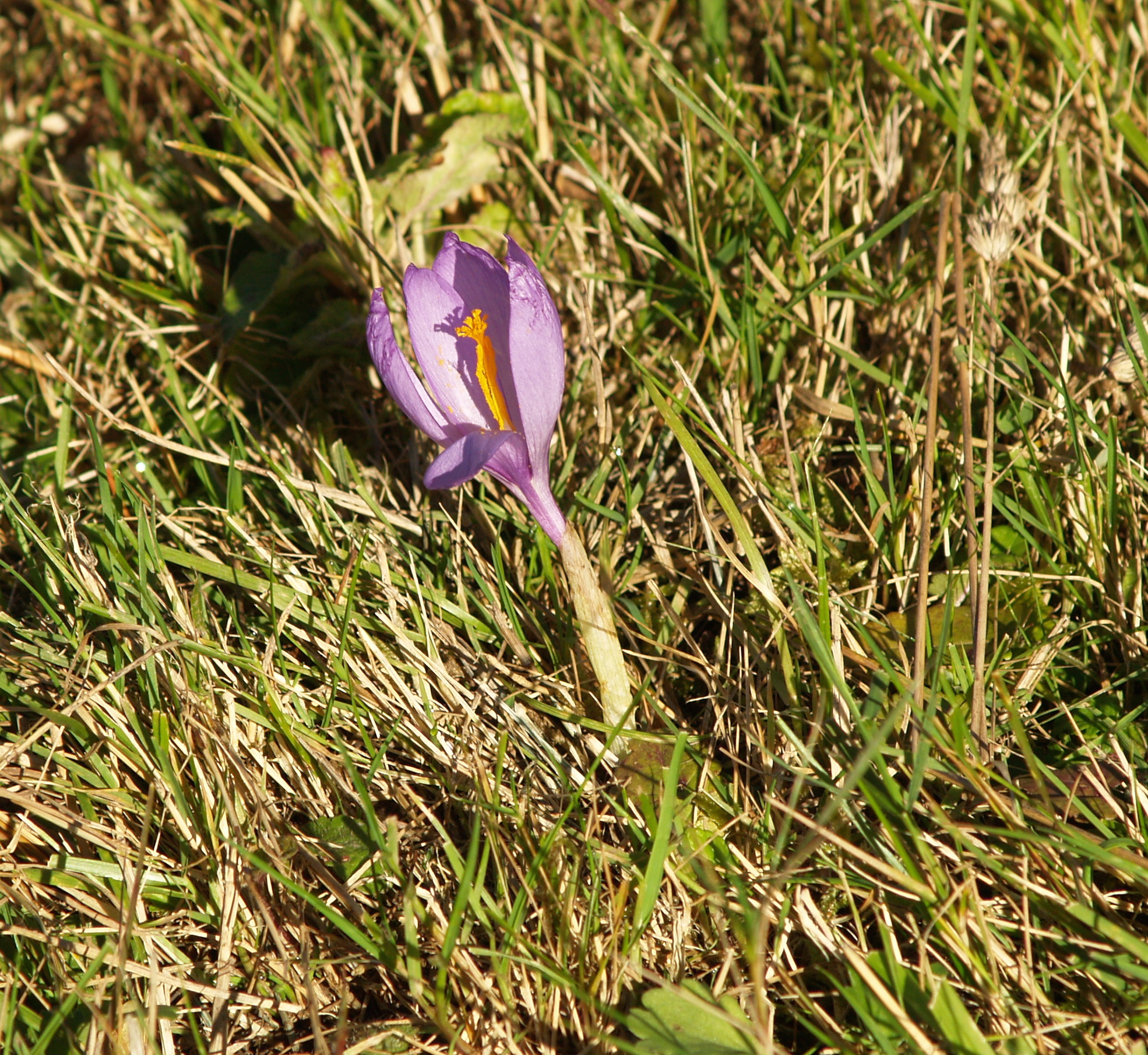
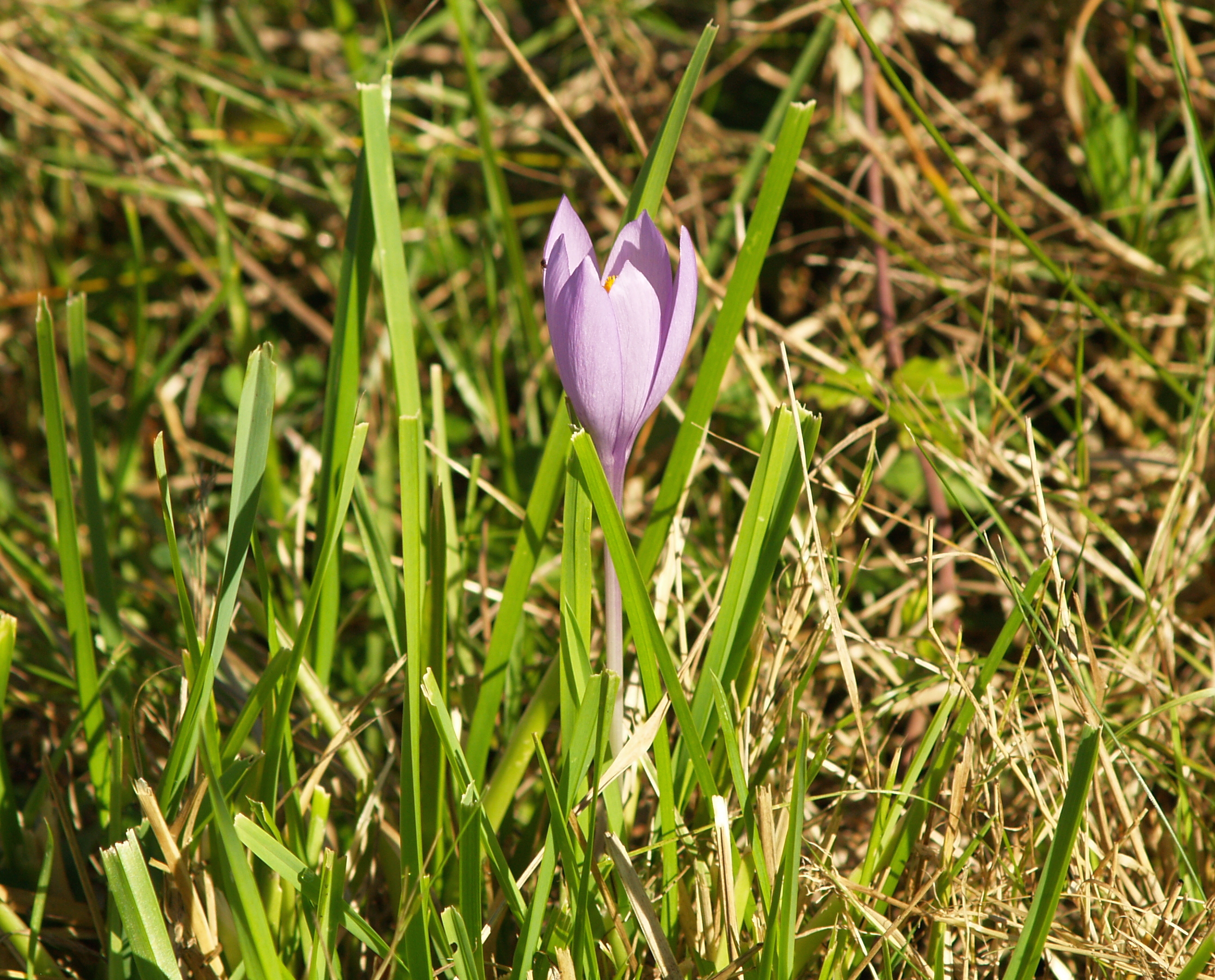
The Autumn Crocus is a bit of a weird one in the Crocus genus, as it is one of the species that flowers in the autumn (hence the name) and it grows on humid soils, whereas many other Crocus species prefer well-drained soils (I assume this has to do with the possibility of the corms rotting). This plant spreads through both seeds and corms (the underground bulbs, which produce stolons). The flowers emerge from late September onward and at first there are no leaves visible. The patches of flowers can become quite dense, I saw them this past weekend in a park in Colombres, Asturias and whole areas of grass under the trees was covered in these flowers. The observation from which the photos below are had a lot less flowers, around 15. Crocus nudiflorus is found in southwestern France and along northern Spain, especially in upland areas.
I noticed these flowers in one of the fields nearby that are used for hay and grazing of horses/donkeys. In this area the ground is generally very humid and during the winter months can become quite boggy with all the rain. I think the flowers are poisonous to animals. Anyway, it was great to see this new injection of colour into the landscape, especially as I never expected it and had no idea Crocuses also flowered in the autumn.
When IDing this species here in northern Spain one has to take care not to confuse it with Late Crocus (Crocus serotinus), which looks very similar except for the stamen (both anther and filament) being completely yellow. On Crocus nudiflorus, the anther is yellow and the filament is white/light purple/blue (in the top picture you can see a hint of white filament). There is also the fact about the plant showing leaves or not, but I do not think that is completely reliable in determining the species. Furthermore, I believe that Crocus serotinus likes drier soils.
Further Reading
– A link to the Alpine Garden Society page on this flower. Has more in-depth information and also a bit more about growing this plant in your garden.
– A PDF detailing the different Crocus species in Spain. From the Fauna Iberica publication and in Spanish. See page 7 for C. nudiflorus.
– My sightings, to date, on Observation.org of this species.
 Searching for Cullum's Bee